
| PANICd.com Stats for Location#: 1093 | |
| History Records: | 1 |
| Paranormal Claims: | 10 |
| Evidence Records: | 0 |
| Stories: | 1 |
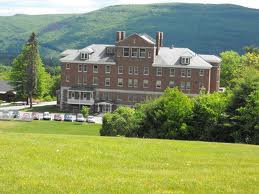
The Austine School for the Deaf in Brattleboro, Vermont, traces its origins back to the late 1800s when Colonel William Austine retired to the area and left a significant financial gift intended to help people in need. Local trustees used that donation to establish an institution in 1904. Although the original idea was to build a hospital, changing needs in the community led to a different vision. Leaders decided instead to create a school dedicated to deaf and blind students, setting the foundation for what would become one of the most important deaf education centers in the region.
The school officially opened in 1912 on a large rural campus with only a small number of students. From the beginning it offered both residential and day programs, drawing children from across New England and even neighboring states. The quiet setting and close-knit environment created a unique learning community where communication through sign language became central to everyday life. Early support from educators and advocates helped the school gain recognition as a place where deaf students could thrive academically and socially.
During the early to mid-1900s, the school continued to expand both physically and academically. New buildings were added, including classrooms, dormitories, and shared facilities. By the mid-twentieth century, the campus had grown into a fully developed educational environment with specialized programs designed to meet the needs of deaf and hard-of-hearing students. The presence of influential figures such as Alexander Graham Bell speaking at an early commencement highlighted the school's importance in the broader movement of deaf education.
The latter half of the twentieth century brought significant changes to education nationwide. Laws promoting inclusion encouraged more deaf students to attend public schools closer to home. In response, the Austin School adapted by expanding outreach services and forming programs that supported students throughout the state. These efforts led to the creation of a broader organization that provided resources beyond the campus itself while still maintaining its residential program.
Despite its long history and deep impact, the school faced declining enrollment and increasing financial challenges in the early 2000s. By 2014 the difficult decision was made to close the school after more than a century of operation. The campus was eventually sold and repurposed, but the legacy of the Austine School remains strong among former students, staff, and the deaf community who remember it as a place of connection, identity, and opportunity.
 Brattleboro Austine School for the Deaf Hauntings - Vermont's Very Best Stories and Legends
- Brattleboro is Vermont's oldest town so it's not surprising that there may very well be a haunting or two in it's long history. At the Brattleboro, VT Austine S
WikiPedia Entry
- Information about this location on WikiPedia
Haunted Vermont: Southern Vermont’s Top Ten Spookiest Spots – The Curious Adventures of Kat
- Discover Southern Vermont's Top Ten Spookiest Destinations
Brattleboro Austine School for the Deaf Hauntings - Vermont's Very Best Stories and Legends
- Brattleboro is Vermont's oldest town so it's not surprising that there may very well be a haunting or two in it's long history. At the Brattleboro, VT Austine S
WikiPedia Entry
- Information about this location on WikiPedia
Haunted Vermont: Southern Vermont’s Top Ten Spookiest Spots – The Curious Adventures of Kat
- Discover Southern Vermont's Top Ten Spookiest Destinations


.PNG)